Wages (Pay as you earn)
15. Jul 2026
DKK 14 billion paid in wages in past 12 months – up 6% year-on-year
Wage expenditures rose by DKK 795 million (6%) in the period of July 2025-June 2026 compared with the previous 12-month period.
[px-graph-5]
The trend in the graph below reveals steady wage expenditure growth in recent years.
[px-graph-1]
Demersal fisheries in total account for 30% of the wage increase
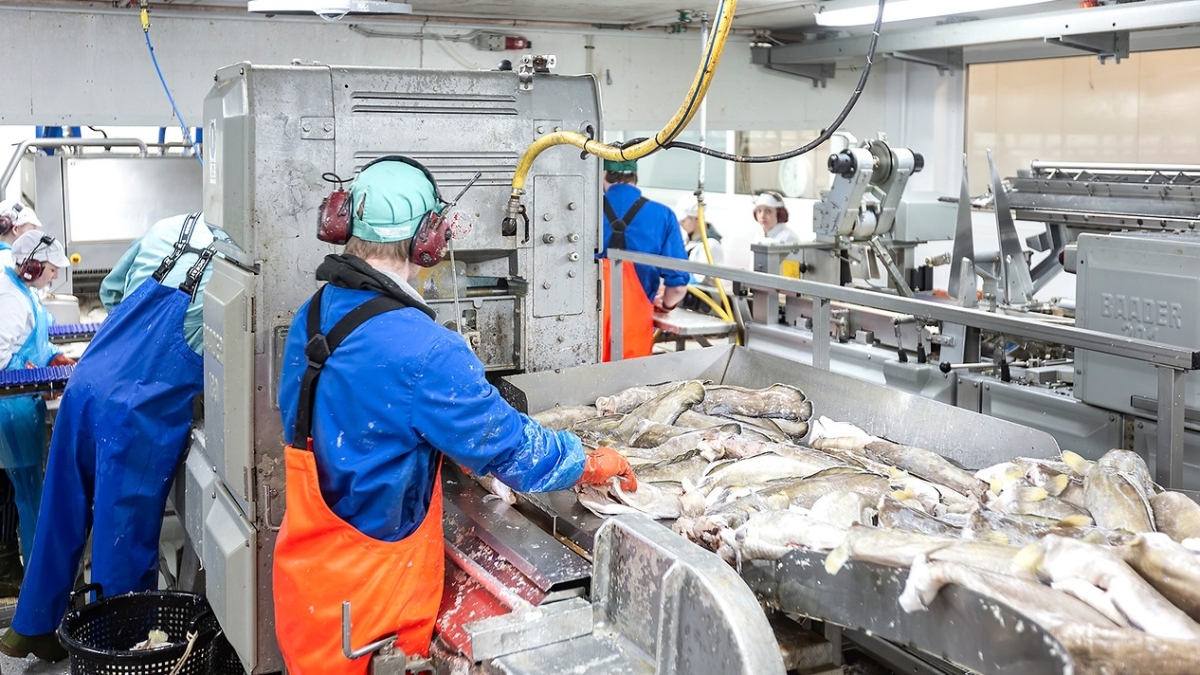
The table below shows A-taxable (taxed at source) wages at the first level of the NACE industry classification in the past 12 months compared with the preceding 12-month period. The largest increase in money terms was seen in ‘Agriculture, forestry and fishing’, especially within the sub-category ‘Demersal fisheries’, where wages increased by nearly 45% year-on-year. When ‘Demersal fisheries’ are combined with ‘Demersal fisheries, processed onboard’, wage expenditure is a total of DKK 244 million higher over the last 12 months compared with the previous period. This is more than 30% of the total wage growth over the last 12 months.
[px-graph-3]
Other activities with large increases in wage expenditure in money terms were 'Transportation and storage', 'Manufacturing' and 'Human health and social work activities', with DKK 90 million, DKK 85 million and DKK 84 million respectively. These had wage increases between 4% and 8%. Below, the wage expenditure for these economic activities and for 'Fishing and aquaculture' are portrayed. This shows that wages in 'Fishing and aquaculture' for the latest 12-month period were particularly high in December, February and March.
The higher wages in December and March are mainly due to 'Demersal fisheries', and those in February to 'Pelagic fisheries'..
[px-graph-3]
Men account for larger share of both wages and growth
Of the wage expenditure totaling DKK 14 billion over the last 12 months, men accounted for 62%. Likewise, men accounted for the larger share — 67% — of the wage increase of DKK 795 million when compared with the previous period.
Wages for men were 6.6% higher over the last 12 months compared with the preceding 12 months. For women, the increase was 5.1%.
Broken down by institutional sector, increase in wages paid was largest among employers under private control with 7.1%. Among employers under public control, the increase was 4.4%.
[px-graph-4]
Highest wage increase in Sandoy region
Below, the percentage change in wage expenditure over the last 12 months compared with the previous period is shown by region of residence. Residents in the Sandoy region saw the highest growth at 12.76%. Streymoy region, north, had the smallest increase, at 3.9%. For wage earners resident abroad, wages paid were 2% higher compared with the previous period.
More detailed wage statistics are available on the following regional pages: Norðoya region, Eysturoyar region, Norðstreymoyar region, Suðurstreymoyar region, Vága region, Sandoyar region, Suðuroyar region
[px-graph-6]
About the wage statistics
Wages as a statistical concept are part of the broader definition of compensation for employees. Compensation is divided into a) wages and b) employers' contributions to social schemes, including pensions. The terms are based on the description in the national accounting manuals 'System of national accounts' published by the UN and 'European system of accounts' published by Eurostat.
According to this definition, wages include wage components such as basic wages, allowances, overtime pay, holiday pay and employee benefits. Not included are employer social benefits such as pensions, unemployment insurance and maternity benefits.
The wage statistics only include cash wages paid by employers to employees through the PAYE system. The wage statistics thus cover A-taxable wages from employers who are economically active in the Faroe Islands. All wage payments that meet the above requirements are included, regardless of whether the employee resides in the Faroes or abroad.
Definitions
- "Under public control" includes "General government" + "Public corporations"
- "Under private control" includes "National Private corporations" + "Foreign controlled corporations"